
Fear of Pulling the Trigger in Trading: Why You Hesitate and How to Fix It
Trading psychology · Updated on September 26, 2026
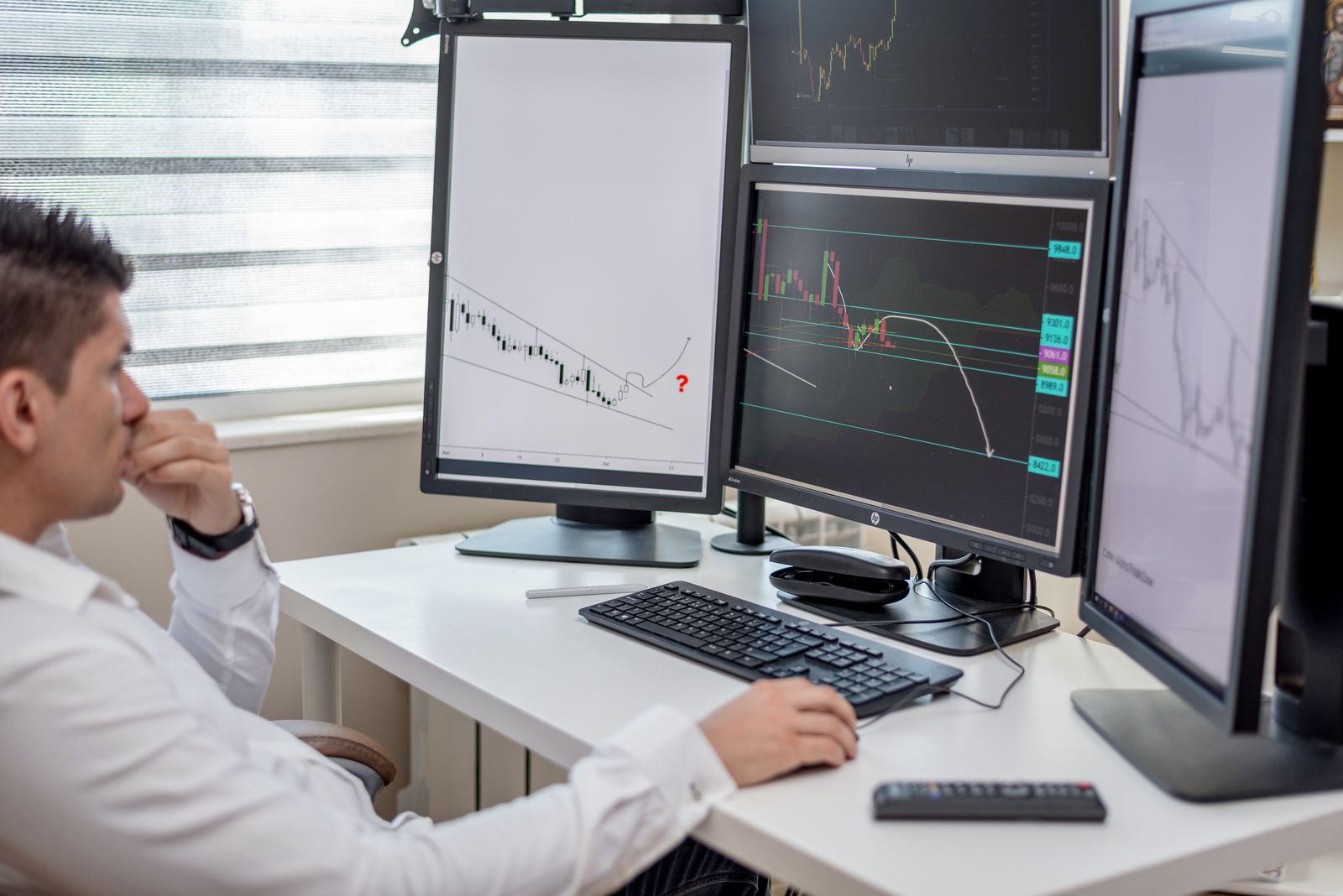
Your fear of pulling the trigger is not a courage problem. Traders who hesitate are not short on nerve. They are short on decisions made in advance. When the setup shows up and your hand freezes above the mouse, it is not the market that scares you. It is having to decide right now, live, what you should have decided before the open. Courage fixes nothing here. A plan does.
Why do you hesitate to enter a trade, even on a good setup?
Because you are asking your brain to do three jobs at once: analyse, decide and execute, in the few seconds while the candle forms. The slightest doubt on any of the three and it locks everything. You wait for one more confirmation. Then another. Price leaves without you, and you tell yourself you were right to wait because "it was too late anyway".
Look closely at your hesitations. They almost always show up in the same situations: a setup you had not written down beforehand, a stop loss you are still looking for as you enter, a size worked out on the fly. Wherever a question is still open, fear moves in. Wherever everything is already settled, the click becomes boring.
The other cause is sneakier: the memory of the last loss. If you are coming out of a rough stretch, every new signal looks like the trade that hurt you. You are no longer judging the setup, you are judging your past. If that is you, start with how to recover from a losing streak.
Is the fear of pulling the trigger just fear of losing?
Partly. Kahneman and Tversky's work on loss aversion suggests that a loss weighs roughly twice as much in our heads as a gain of the same size. Facing a trade, your brain does not see the opportunity. It sees what the trade could cost you.
But fear of losing does not explain everything. You handle a loss fairly well when it was planned: a stop hit on a trade from your plan stings, then passes. What freezes you is the loss you did not choose. The one that makes you say "I knew it". Hesitation is trying to avoid regret, not loss.
And here is the trap: hesitation costs money too. The trade you skip is recorded nowhere, so it feels free. Then price runs, frustration builds, and you end up entering later, higher, with no plan. That is the straight road to FOMO in trading. The fear of entering and the urge to chase price are often the same trader, twenty minutes apart.
What position size stops the fear of entering a trade?
A size whose loss does not stop you from clicking. It is not a formula, it is a test. Before entering, look at the amount you lose if your stop is hit. If that number tightens your throat, your position size is too big for your current state, even if it follows your rule on paper.
Cut it. Seriously. Halve it, then halve it again if you need to. The goal of this phase is not to make money, it is to relearn how to execute. A tiny trade taken cleanly beats a perfect trade you watch leave without you. Once execution becomes automatic again, you scale the size back up in steps.
A fixed risk per trade, decided once and for all, does the rest. Your maximum loss is known before you enter. It stops being a threat and becomes what it really is: a cost of doing business.
How to stop hesitating before entering a trade: the method in 4 steps
1. Write your setup before the open. One sentence: the instrument, the level, the entry condition. If what happens on screen does not match that sentence, you stay out, and there is nothing to regret.
2. Place the stop before you think about the gain. Do you know where your idea is proven wrong? Then you know where your stop goes and how much you are risking. If you cannot say where to put it, that is not fear: the trade is simply not ready.
3. Give yourself a trigger rule. Condition met, you enter within seconds. No extra confirmation, no second opinion from a forum. The time between the signal and the click is the space where fear negotiates. Shrink it.
4. Judge the execution, not the outcome. For your next twenty trades, track one thing only: did I take the trade my trading plan called for? A losing trade taken by the plan is a success. A trade missed through hesitation is a mistake, even if the market proved you right to stay out. That is how discipline gets built, not through willpower.
How do you prep your trading session so you can enter without hesitating?
Everything above fits into one specific moment: the minutes before your first trade. That is when you decide, so you no longer have to decide under pressure. In TradingNerve, that is the job of the "Session" tab. Your session prep comes down to "Three steps before your first trade": the "Session prep", the "Pre-trade checklist" and the "Mood check-in".
In the prep, you set your "Market bias": "Long", "Neutral" or "Short". If your bias is long, the short signal flashing mid session is no longer a question, it is already ruled out. Then you set "Today's limits": "Max loss", "Max trades", "Risk/trade". You tap "Save my prep", and the step ticks itself. Once all three steps are done, the app shows "Ready to trade". Your trading journal then shows you, trade by trade, whether you followed that plan.
The app is available on iPhone.
You do not need more courage to pull the trigger. You need to have pulled it already, before the open, on paper. The click then stops being a decision. It is just execution.