FOMO in Trading: Why You Chase Price, and How to Overcome It
Trading psychology · Updated on August 18, 2026
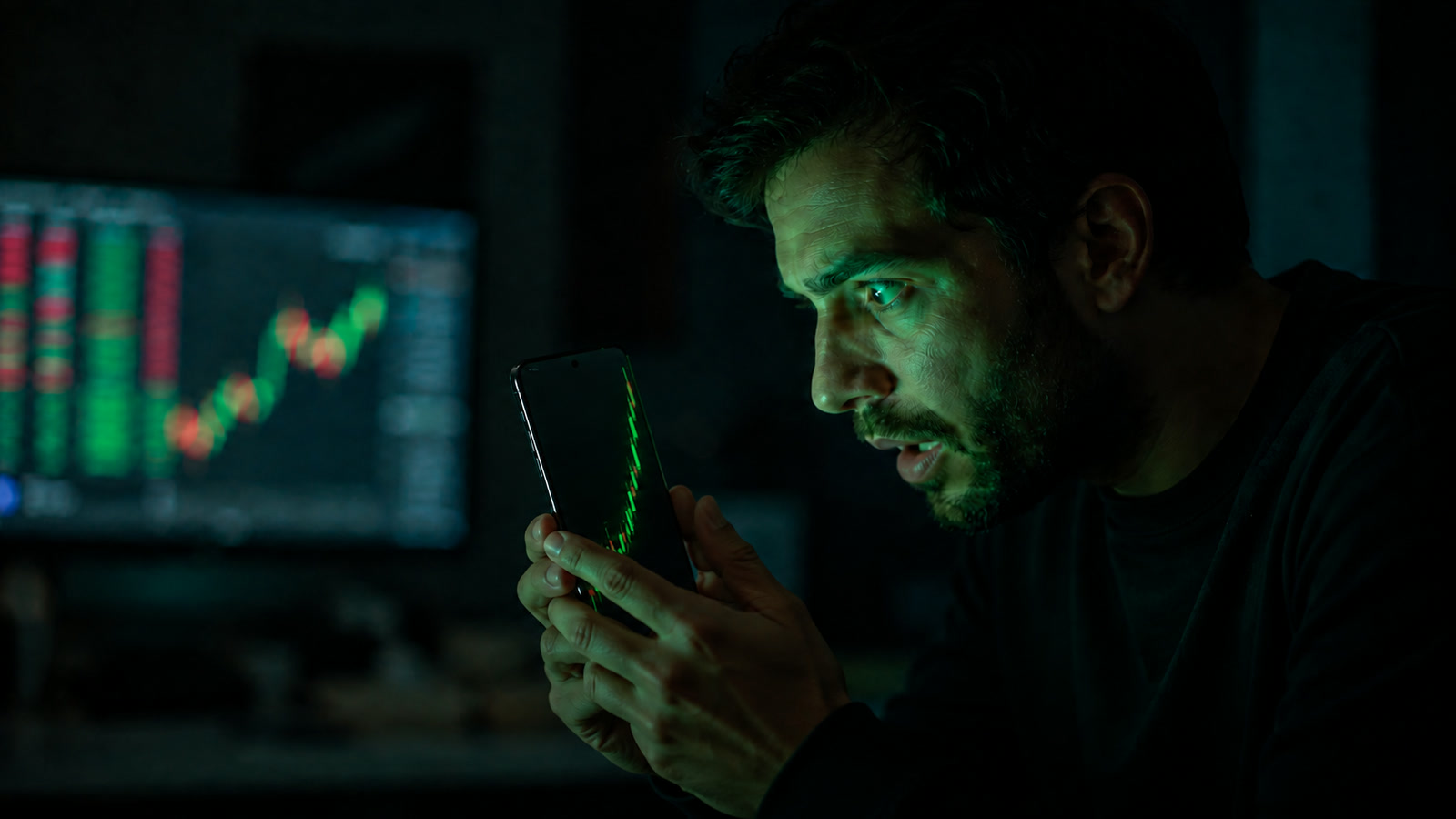
It is 4:02 pm. The Nasdaq rips 1.8% in twenty minutes, your X feed floods with gain screenshots, and you are flat, watching. Your throat tightens: "everyone is in except me". Two minutes later you are long, at the top, oversized, with no thought-out stop. The move stalls, and in one hour you give back what took a week to build.
That has a name: FOMO, the fear of missing out. And it fills losing-trade journals faster than any other emotion.
FOMO trading psychology: why your brain fears missing out
FOMO is not a simple lack of discipline, it is a stack of biases behavioral finance knows well: regret aversion (missing a gain hurts more than taking an equivalent loss), herd behavior (if everyone is buying, my brain concludes it must be safe), recency bias (three green candles and you extrapolate a forever trend), and the social proof of feeds where nobody posts their losses.
Unlike revenge trading, which builds after a loss, FOMO hijacks you in seconds: one notification, one gain screenshot, one vertical candle, and your morning plan no longer exists. The market seems to rush you. It does not. That sense of urgency is exactly what makes people sign bad contracts.
Signs of FOMO trading: how to know you are chasing price
You enter AFTER the move, never before. Your signal is no longer your setup, it is the rally itself. If your reason for entering is "it is going up hard", you do not have an analysis, you have an emotion.
Urgency replaces the plan. No thought-out entry level, no calculated stop, an improvised size: the trade got decided within one scroll. A real setup can wait five minutes. An impulse never can.
Your feed decides your trades. You open positions because of a tweet, a Telegram, a P&L screenshot. The day your entries come from your phone instead of your plan, FOMO is in charge.
Why FOMO trading loses money
The mechanics are cruel: by the time a rally is visible enough to tempt you, most of it is already spent. Buying the obvious breakout at the top means providing exit liquidity to the pros who entered long before. Statistically the FOMO trade stacks the worst of everything: late entry so bad price, missing or oversized stop so heavy potential loss, oversized position because "this one is sure", and a panicked exit on the first pullback.
It also carries a hidden cost: even when it wins, it teaches you the worst possible lesson, that impulsivity pays. Two winning FOMO trades can fund months of indiscipline.
How to overcome FOMO in trading: a 4-step method
Write your plan before the session, not during. Instruments, allowed setups, max number of trades: decided cold in the morning. Any trade that was not planned in the morning is a FOMO trade by definition, and that simple definition settles 90% of cases.
Apply the 5-minute rule. Sudden urge to enter an unplanned trade: timer, five minutes, screen or no screen. If the setup is real, it will still be valid. In the vast majority of cases the urge dies before the timer does: it was an impulse, not an opportunity.
Keep a "watch, do not trade" list. The move left without you: write down the instrument and observe it instead of chasing it. You turn frustration into information, and you will notice half of those trains end up derailing.
Cut the feeds during the session. Other people's gain screenshots are FOMO fuel number one, and nobody posts their losses. Your chart and your plan contain everything you need between 9:30 and 4:00.
A trading journal is the best tool against FOMO
This is exactly why we built TradingNerve. The pre-session check-in asks how you feel, and "FOMO" is literally one of the choices: ticking it already defuses it. You set your plan and your max trades before the session, you tag your FOMO trades in your journal, and then the magic happens: after a month you SEE their real win rate and P&L, almost always terrible. The AI coach then reads your trades and tells you straight: "your unplanned entries cost you X dollars a month". You do not cure FOMO with willpower. You cure it with evidence.
Next time the train leaves without you, remember: the market opens again tomorrow, and there is another train every hour. Pros miss 90% of all moves on purpose, they only take the ones that follow their rules. Your trading discipline is worth more than any missed breakout.